I am a Christian seeking to live in truth, holiness, and obedience to God.
My faith is Russian Orthodox Christianity.
Orthodoxy – Not a Religion – The Way of Life

Unlike the many denominations of other churches, in Orthodoxy, we have none. This is because we recognize there is and has only been one true apostolic church.
Our faith is not based on man-made concepts (such as theories,philosophy,social expectations,emotionalism,political correctness); it follows only the truth – the teachings of Jesus Christ and his disciples.
It is the path to holiness – the life mission of every Christian soul. We are here to evince God’s will. We are here to be channels of His love to all. We are called to be saints.
Spiritual experience and the teaching of the Saints inform our faith and open us to receipt of Divine wisdom. As Saint Justin Popovich of Serbia taught, Orthodoxy is not a library to be studied, but a life to be lived.
I strongly recommend those with an interest in Orthodoxy seek righteousness, read the Bible and the writings of the Saints/Desert Fathers, pray, and seek counsel from a local Orthodox priest or monastery. Although for many in the United States, your parish may be hours away, remember you also have the blessing of remote online liturgy (which, when attended wholeheartedly as one would in person can feed the soul.) Fellowship and worship with Orthodox Christians is a blessing. It is, however, sometimes few and far between in the United States, unless one lives in a major city. Seek, pray, and God will provide.
The path of Orthodoxy is of the heart, the soul, not humanism which places man’s understanding above that of God.
Because truth is unchanging, Orthodoxy does not adapt itself to the shifting values of the world.
As we are warned in Scripture, “There is a way which seemeth right unto a man, but the end thereof are the ways of death.” (Proverbs 14:12, KJV). Sadly, this describes many of the false teachings and ideologies of American “Christians” and their churches. They have conformed to the world – to Satan’s deception. This is why they debate amongst themselves, changing to accommodate the popular opinion of the corrupt society in which they are based.
“Jesus Christ the same yesterday, and to day, and for ever,”(Hebrews 13:8, KJV). Likewise, the Orthodox Church and the holy traditions we practice remain unchanged from the time of the apostles. We focus upon our heart in relation to God’s will in all matters.
If you are reading this, perhaps you are experiencing the desire to be part of not just a church – you are called to be part of THE Church. You may find yourself at odds with the teachings of the church you attend. You are discerning the wrongness of man-made doctrines and ever-changing tolerances of evils you know are anti-God. You may yearn for and experience God in ways those around you do not look to do. You seek truth…and in the Orthodox Church, you will find it.
– Christine Lynn, August 12, 2023
Want to visit an Orthodox Church? Here’s my advice.
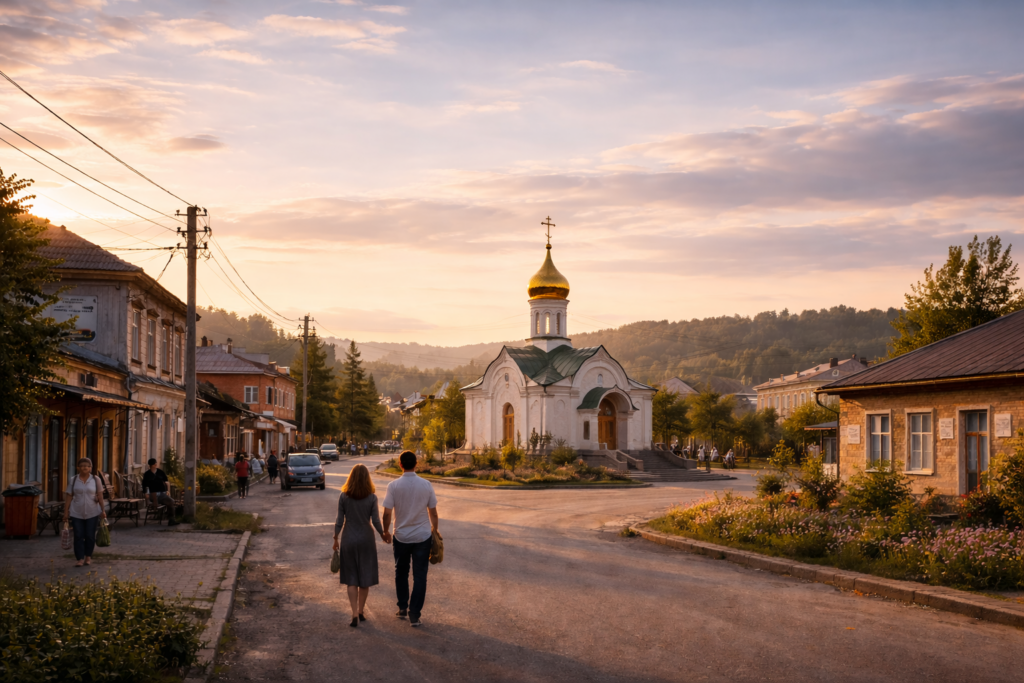
Since beginning my personal website sharing my faith, I have received requests for help from people to learn more about Orthodoxy and how to choose a church to visit first.
I’ve heard from Americans who have visited an Orthodox church for the first time who came away perplexed and discouraged. They had no idea what was going on or what they were to do. Wanting to be respectful, they adjusted (coped) as best they could, but the differences between what they knew of churches and this experience were overwhelming. There was no one there to help them. One man even told me recently that in his search for a church he felt was truly teaching the truth of Christ, he had visited many churches over the years – none of them resonated. He shared that in his search, he did visit an Orthodox church, over 50 years ago, and he never went back to that or any Orthodox church after because it was strange, and without any context or help, he understood little. He never returned until 50 years later, after hearing me speak. And, after a few years of learning, study, and worship, he is now an Orthodox Christian. His and other similar stories have led me to know that it is very important that we as Orthodox Christians do more to guide those who are interested in our faith – including providing guidance for their actual first visit. It is my hope that this brief piece will help.
Thus, I write this guide, informed by my personal experience and faith. It is by no means exhaustive, and in fact, is only a preliminary piece to which I may return and add as time permits.
Which church to visit – there are so many Orthodox churches?
My years of loving Christ, seeking to evince God’s will, on a path to develop holiness so that I may be in communion with God, culminated when I discovered there is the one true, authentic, apostolic original church still in existence: The Orthodox Church.
For me, I seek holiness and spiritual edification. I do not like those which feel Westernized, or Americanized as I call it – the Western mind produces a very different type of worship, which may be good for those who seek more of a social experience at church, but not me. Every parish has its priest, and for my spiritual growth there must be trust in his spiritual understanding; discernment in this is personal.
One must simply visit the churches near them and decide. (Note: the references to “Russian” or “Greek” or “Serbian” for example are not differences in the fundamental theological beliefs (the Trinity, the divinity of Jesus Christ, the significance of the Nicene Creed, and the importance of sacraments like baptism and the Eucharist), nor are they churches for those ethnicities solely, but rather reflect the nuances/traditions of those Orthodox who first began the church. There will be difference, of course, such as in Russian churches you will hear Church Slavonic. It is up to you, a seeker, which you find rapport with – the church and priest for spiritual instruction.) Personally, I love Russia and believe it is the hope of the world, and that the Russian Orthodox Church has preserved the Orthodox faith with exceptional integrity through centuries, serving as its keeper.
What To Expect
First, prepare yourself by perhaps viewing a few Divine Liturgy services online before attending a church. Our customs/traditions date back to the Early Church, and having seen them first will help.
Attire: Dress respectfully. You are coming to worship God. Nothing overly formal (suits, for example, are not needed). For those attending a Russian church, be aware that females must cover their heads and usually wear long dresses.
Entry: Upon entering the church, you will notice icons – and parishioners venerating icons. This may be alien to you. That is OK. You need not do what you see others are doing (such as standing in reverence before icons, bowing head, praying, and kissing the icons). Simply walk past. You will learn what this is about later, if you have not already. Do not feel compelled to imitate that which you are not yet aware of. Simply enter into the church.
In progress? The priest and others have been there, in worship, preparing for the parishioners, for a long time before most enter (an hour or more). Be assured – you are not late, you are merely coming into the church as it is in worship preparing for you.
Language: Depending on the parish…
We stand: Well, at least in Russian Orthodox Churches, we stand, as well as in others true to tradition (though some other Orthodox churches in America have pews). We stand in reverence before God. We are about to partake in the Divine Liturgy, a commemoration of Christ’s life, so we stand in respect. However, you should always feel free to take a seat (usually there are chairs on the sides for anyone who becomes fatigued or who needs to sit due to age/infirmity). Do not be self-conscious. If standing for a prolonged time will detract from your appreciation of that which is being sung and spoken, please sit. No one will look askance at this.
The sign of the cross: You will see many crossing themselves (the Orthodox way) frequently. It is a physical prayer. Crossing oneself is done when we pray in the name of the Trinity, before icons, and at other times in the Divine Liturgy. Again, you may choose to do so or not at this point. Observance of others can help you learn when we do this. We also do so upon entering and leaving the church. In our lives, we do so in prayer throughout the day.
Music – The beauty of the human voice – no instruments – prayer to God. In the Russian Church, the music is soul-touching. Of course, as this may be new to you, you will not understand the words of praise (you may later wish to take the step of reading, in English, the chants/prayers/and psalms you hear). Suffice to say: they are deeply spiritual, emanating from the Byzantine and adapted to Church Slavonic. (Visit my links page for music – some of my favorites, which I play at home.)
Holy Eucharist (Communion) – Only Orthodox can participate in this Sacrament. Simply stay put, standing or sitting, as not being Orthodox, you must not partake. However, we also have blessed bread, prosphora (antidoran). which you are free to take (usually offered to you or free to take at the end of the liturgy). It is the same bread as in the Eucharist/Communion, only it has been blessed by the priest, though not consecrated.
The Holy Theotokos – We venerate Holy Mother Mary and ask her help and intercession, as well as the help and intercession of other saints, just as we would ask for the help, guidance, and prayers from others we love and who love us – both living and dead. Those who love God are with us in spirit.
The Priest – Finally, arrange a meeting with the priest in which you express your desire to learn more. Our church is not one you just become a member of by attendance – it is a spiritual journey of learning, with your priest knowing when you are ready to join. He will explain the path from inquirer (where you are at now) – to catechumen – to member.
There are other significant aspects to the traditions and what you will see in our church, but as I said, this is just a quick piece I thought I’d write for those who are just beginning to explore.
Prayers
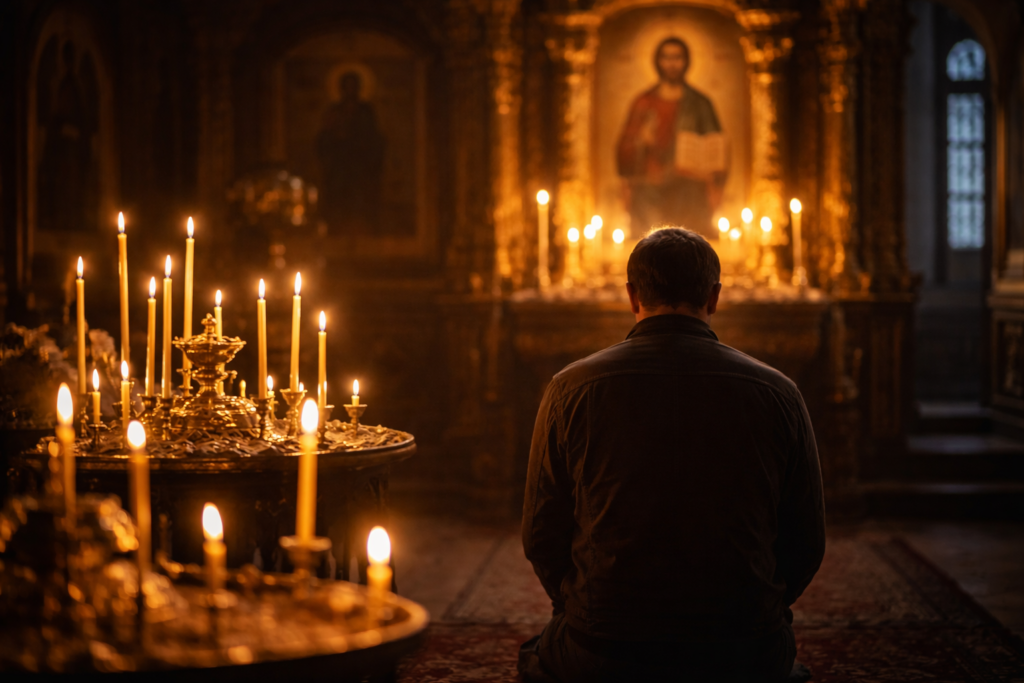
Prayer is our communication with God — whether in the quiet solitude of one’s home, outdoors amid the beauty of God’s creation, or within the Church.
The Jesus Prayer
Lord Jesus Christ, Son of God, have mercy on me, a sinner.
Prayer of Philaret – Metropolitan of Moscow – 1782-1867
My Lord, I know not what I ought to ask of Thee.
Thou and Thou alone knowest my needs.
Thou lovest me more than I am able to love Thee.
O Father, grant unto me, Thy servant, all which I cannot ask.
For a cross I dare not ask, nor for consolation;
I dare only to stand in Thy presence.
My heart is open to Thee.
Thou seest my needs of which I myself am unaware.
Behold and lift me up!
In Thy presence I stand,
awed and silenced by Thy will and Thy judgments,
into which my mind cannot penetrate.
To Thee I offer myself as a sacrifice.
No other desire is mine but to fulfill Thy will.
Teach me how to pray.
Do Thyself pray within me.
Amen.
The Nicene Creed – (The Creed of our Faith)
I believe in one God, Father Almighty, Creator of heaven and earth, and of all things visible and invisible.
And in one Lord, Jesus Christ, the only begotten Son of God, born of the Father before all ages.
Light of Light, true God of true God; begotten, not made; consubstantial with the Father, by Whom all things were made.
Who for us men and for our salvation, came down from heaven and was incarnate of the Holy Spirit and of the Virgin Mary, and was made man.
He was crucified also for us under Pontius Pilate, and suffered and was buried;
And the third day He arose again, according to the Scriptures.
And He ascended into heaven and sits at the right hand of the Father;
And He shall come again with glory to judge the living and the dead, and His kingdom shall have no end.
And in the Holy Spirit, the Lord and Giver of life, Who proceeds from the Father, Who together with the Father and the Son is adored and glorified, who spoke through the prophets.
In One, Holy, Catholic and Apostolic Church.
I profess one baptism for the remission of sins.
I look for the resurrection of the dead, and the life in the world to come.
Amen.
St Philaret’s Morning Prayer
Lord, give me the strength to greet the coming day in peace. Help me in all things to rely on Your holy will. Reveal Your will to me every hour of the day. Bless my dealings with all people. Teach me to treat all people who come to me throughout the day with peace of soul and with firm conviction that Your will governs all. In all my deeds and words guide my thoughts and feelings. In unexpected events, let me not forget that all are sent by you. Teach me to act firmly and wisely, without embittering and embarrassing others. Give me the physical strength to bear the labours of this day. Direct my will, teach me to pray, pray in me. Amen.
– St. Philaret, Metropolitan of Moscow (1782-1867)
(The Orthodox Music & Video page has links to the morning and evening prayers in English.)
Music & Videos
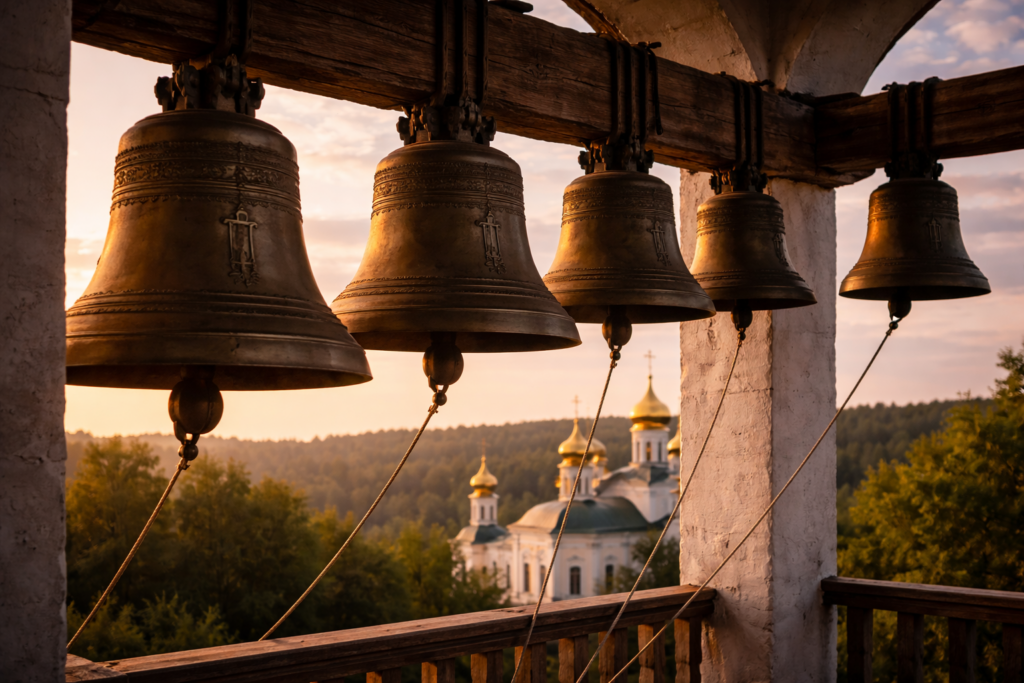
Music
- Liturgy Of St. John Of Chrysostom – Chants Of The Russian Orthodox Church
- Winter Night In A Russian Monastery – ASMR Ambience
- Russian Orthodox: Choral Music from Brilliant Classics
- Hidden Music Of The Russian Church – Moscow Patriarch Choir, Ilya Tolkachev Sacred – Chants after the Revolution 1917 (Alexandrov / Chesnokov / Golovan)
- Russian Orthodox Church Bells
- Sacred Treasures III: Choral Masterworks from Russia and Beyond
- Tchaikovsky: Liturgy of St John Chrysostom (Brilliant Classics)
- Echoes of Eternity: Russian Sacred Music – Divine Wisdom of St. Sofia | A Spiritual Odyssey! (Sound of Prayers)
Film / Video / Audio
- The Mystery of the Eastern Orthodox Church
- How the early Christians fought demons
- Moscow Orthodox Patriarch criticizes the heresy of Modernism
- Jesus Christ – Life Changing Quotes from RedFrost Motivation
- I highly recommend Father Spyridon Bailey, an Orthodox priest of integrity and courage serving in ROCOR. He has recorded edifying spiritual messages for many years: Father Spyridon’s YouTube
- The Island (2006 Russian film with English subtitles) – life of an Orthodox monk
- Eastern Christian Orthodox Morning Prayers (English, with chants)
- Eastern Christian Orthodox Evening Prayers (English, with chants)
- Cathedral of the Armed Forces of the Russian Federation – walk-through (Pepe Escobar / Yuliana Titaeva, Dec 21, 2023)
- Orthodox Patriarch of Moscow – “The West is making a mistake” (English subtitles)
- Paschal Midnight Divine Liturgy – Patriarch of Moscow and All Rus (May 31, 2021)
- Life of Saint Joseph the Hesychast – The Movie
LITERATURE
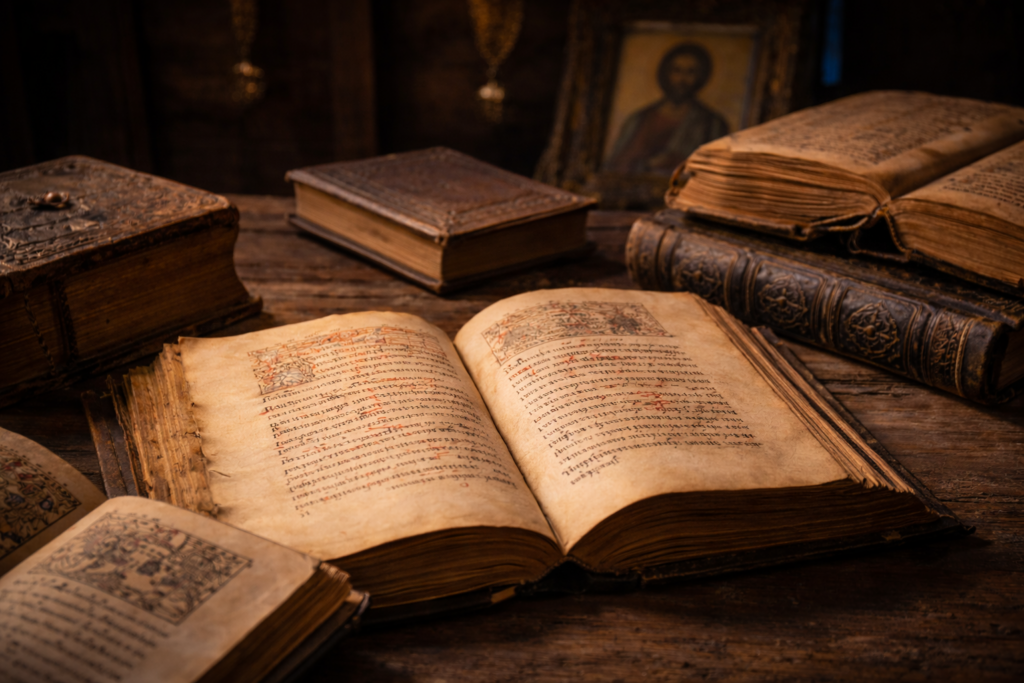
Foundational Orthodox Theology & Spiritual Life
- Theosis: The True Purpose of Human Life
By Archimandrite George, Abbot of the Holy Monastery of St. Gregorios, Mount Athos - Philokalia – The Complete Text
by St. Nikodemos of the Holy Mountain and St. Makarios of Corinth - Orthodox Catechism
Early Christianity & Apostolic Teaching
- Early Church Fathers volumes from Christian Classics Ethereal Library
- The Didache (The Teaching [or Doctrine] of the Twelve Apostles) – text and audio
Contemporary Orthodox Witness & Teaching
- Healing the Wound
A timeless letter from St. Afanasy (Sakharov) regarding those who separate themselves from the Russian Patriarchal Church - Sermons from His Holiness Patriarch Kirill (in English)
My Recommendation
I recommend the book, The Orthodox Way, by Kallistos Ware (an excellent introduction to the traditions and beliefs of Orthodox Christianity, with an emphasis not on rules or dogma, but rather on the experiential journey into the mystery of God). Search for it wherever you buy books (print, audio, or electronic).